Turkey performs a large volume of hair transplants every year, which means the range of quality between providers is wide. Here's what's actually worth checking before you book.
Hair Transplant
Choosing a Hair Transplant Surgeon in Turkey: What Actually Matters
When evaluating a hair transplant provider in Turkey, look for clarity on which technique is used (DHI or FUE) and why, hospital or clinic accreditation, whether a real medical team handles graft extraction and placement, transparent all-inclusive pricing, and real, verifiable before/after results rather than stock photography.
Written by Seta Clinic GlobalLast updated 1 August 2026
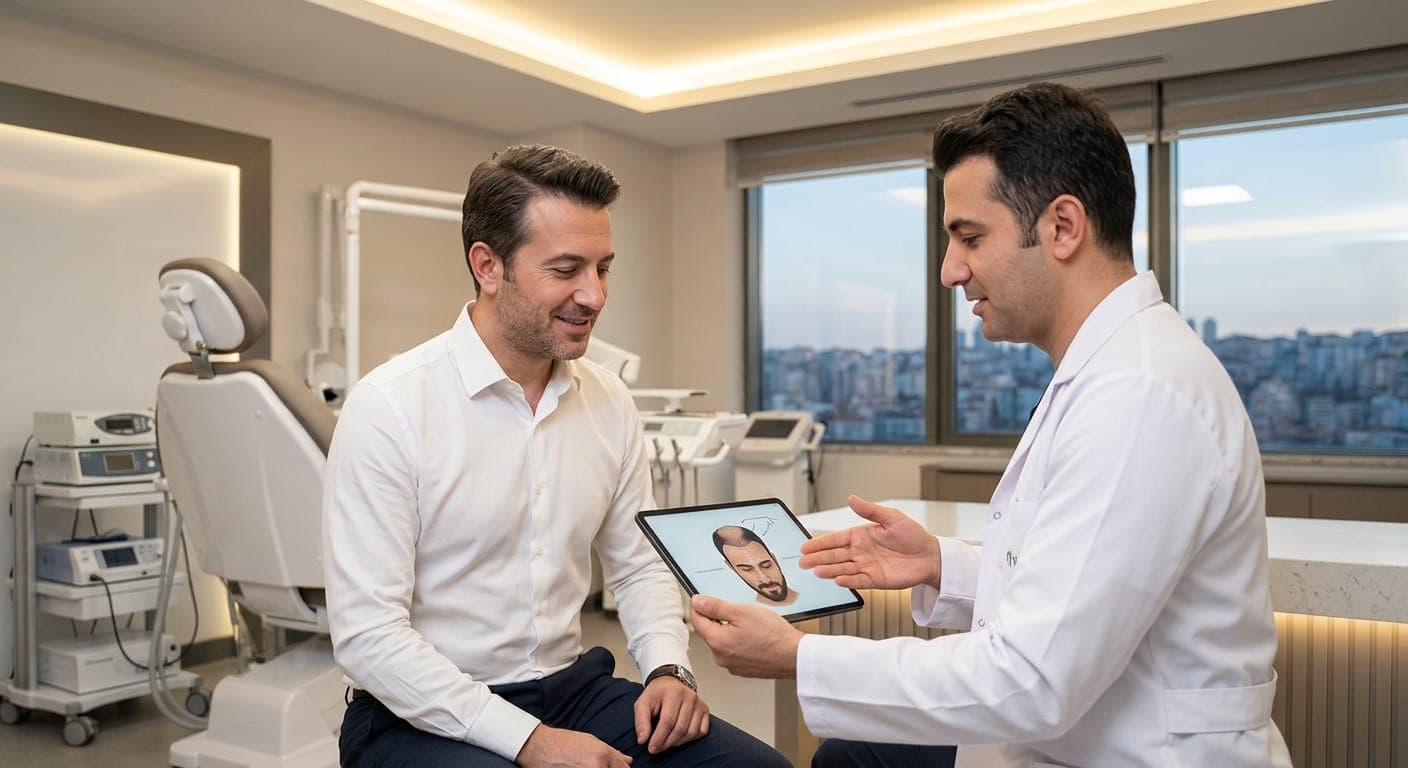
Ask which technique is used, and why
DHI and FUE are both legitimate, established techniques, but they suit different cases. A provider who can explain clearly which technique fits your hair loss pattern, and why, is a better sign than one who defaults to a single answer for everyone.
Check hospital or clinic accreditation
Accreditation standards, like JCI accreditation for hospitals, exist specifically to verify safety protocols, hygiene standards, and quality of care. It's a concrete, checkable fact rather than a marketing claim.
Ask who actually performs the procedure
In a legitimate clinic, graft extraction and placement is performed by a qualified medical team under the direction of the treating physician. It's a fair, reasonable question to ask directly who will be involved in your specific procedure.
Look for transparent, all-inclusive pricing
A clear package that covers the procedure, hospital stay, hotel accommodation, and transfers is easier to evaluate honestly than a low headline price that turns out to exclude major costs. Ask exactly what's included before comparing prices between providers.
Ask for real, verifiable before/after results
Real result photos, shared with patient consent, are one of the most useful things you can evaluate. Be cautious of galleries that look overly polished or stock-photo-like, and don't hesitate to ask whether a specific result photo is a real patient.
Related treatment
Frequently asked
Neither is universally better. DHI uses a pen-like tool for direct implantation with no pre-made incisions, while FUE can be more efficient for larger sessions. A good provider recommends based on your specific case, not a one-size-fits-all default.
Ready to talk through your options?
A coordinator can answer questions specific to your case.