"Veneers" can mean two fairly different things depending on the material. Here's what actually separates E-max ceramic veneers from composite (bonded) veneers.
Dental Aesthetics
E-max vs Composite Veneers: What's the Real Difference?
E-max veneers are lab-made ceramic (lithium disilicate) that require minimal tooth preparation and typically last many years thanks to their strength and enamel-like translucency. Composite veneers are bonded directly onto the tooth by a dentist in a single visit, cost less upfront, and are more easily repaired, but generally don't last as long or resist staining as well as ceramic.
Written by Seta Clinic GlobalLast updated 1 August 2026
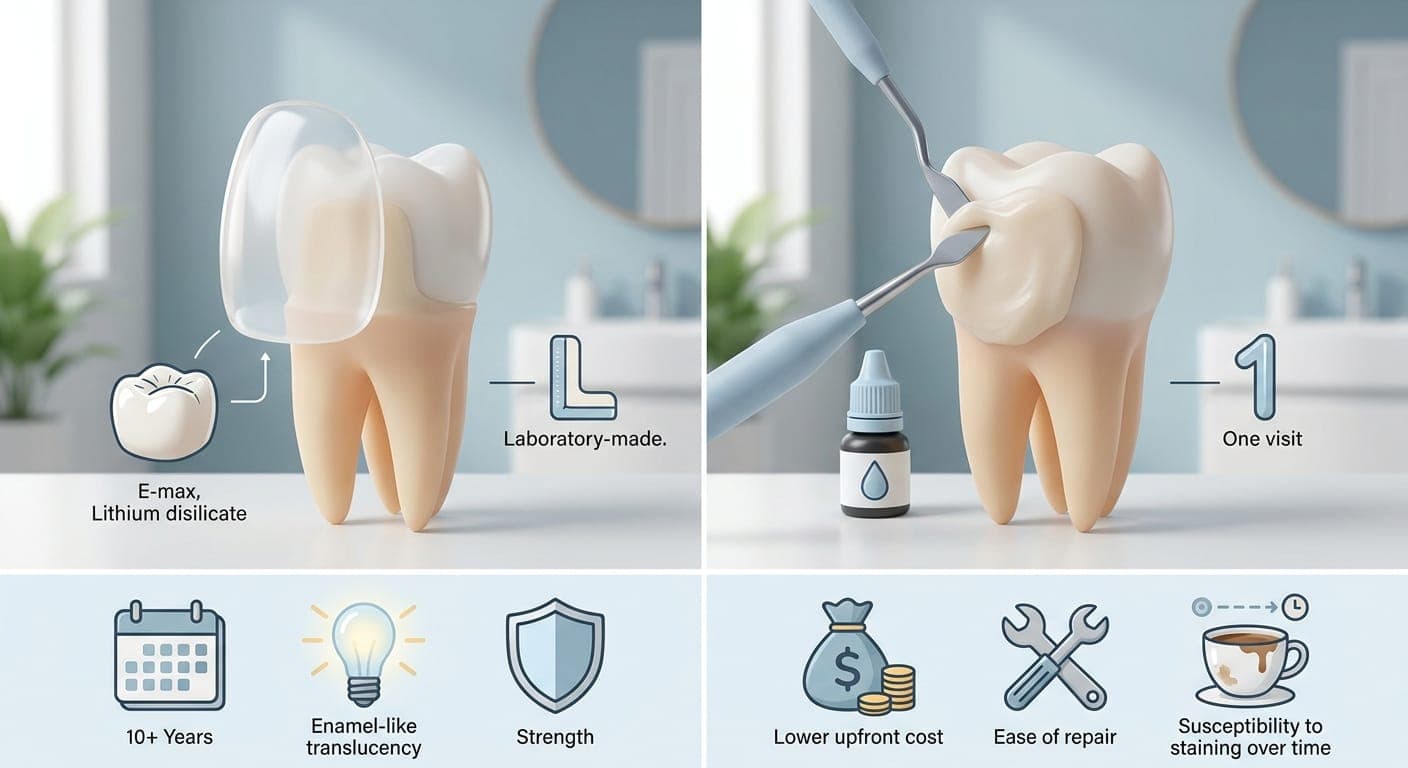
How each is made
E-max veneers are custom-fabricated in a dental lab from lithium disilicate ceramic, then bonded onto your prepared teeth. Composite veneers are built up directly on the tooth surface by your dentist, layer by layer, in a single appointment.
Appearance and translucency
E-max is prized for how closely it mimics the way light passes through natural enamel, which is part of why it's a common choice for a Hollywood Smile front-tooth result. Composite has improved significantly but generally doesn't match the same level of translucency over time.
Durability and staining
Ceramic is more resistant to staining and wear than composite resin. Composite veneers are more prone to picking up discoloration over time (from coffee, tea, or smoking, for example) and generally have a shorter lifespan before needing replacement or touch-ups.
Cost and commitment
Composite veneers cost less upfront and can sometimes be applied with little to no tooth preparation, making them a lower-commitment option. E-max involves lab fabrication and a small amount of enamel removal, a bigger upfront step, but one that generally pays off in longevity.
Which one is used for a Hollywood Smile
Hollywood Smile treatment plans are typically built around E-max or Zirconium ceramic, chosen specifically for the combination of durability and natural appearance a full smile transformation calls for. Your dentist will discuss material options and what fits your goals during Digital Smile Design planning.
Related treatment
Frequently asked
Composite can be a reasonable lower-commitment option for smaller touch-ups, but for a full smile transformation, ceramic materials like E-max are generally preferred for their durability and natural translucency.
More in Dental Aesthetics
Ready to talk through your options?
A coordinator can answer questions specific to your case.